Cloud & IT

Moving Off Desktop: A Guide for Independent Rod Lift Engineers
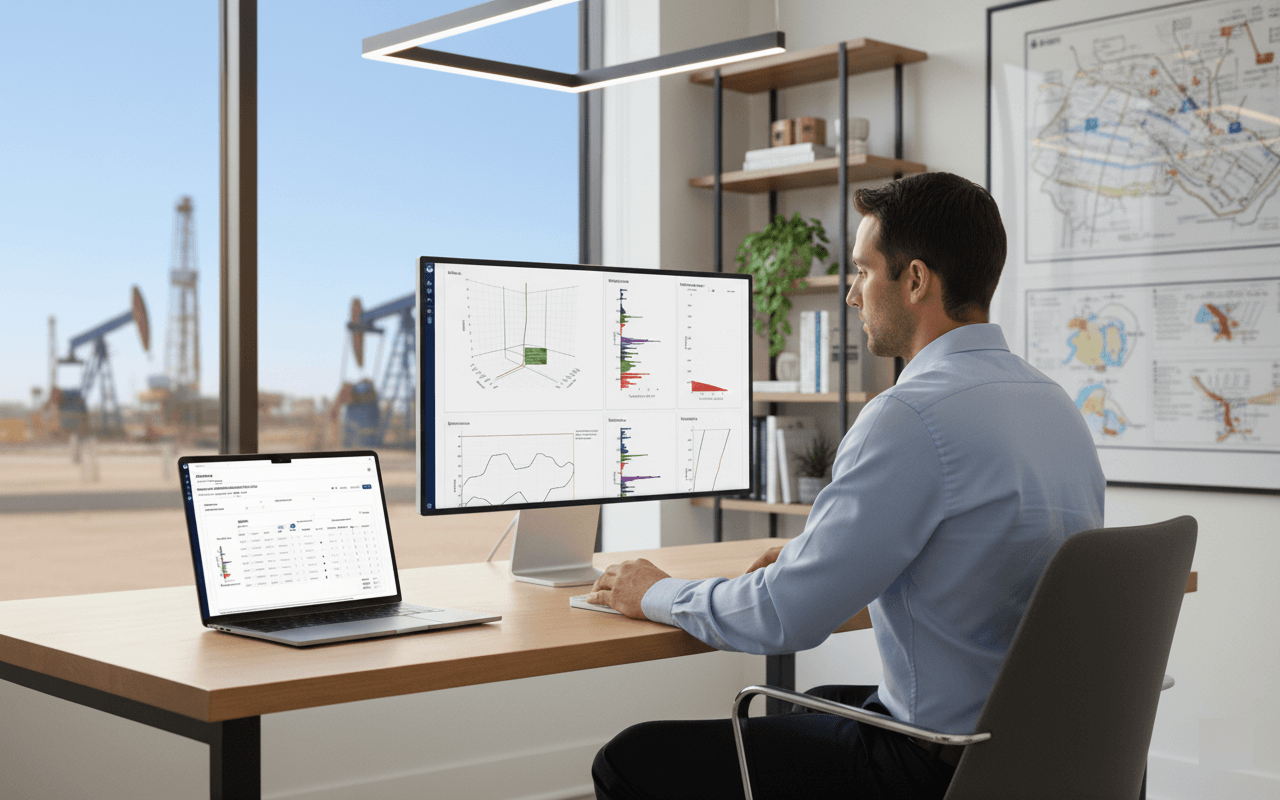
What the transition from legacy desktop rod pump tools to cloud-based simulation actually looks like - what transfers, what changes, and what you gain.
3 min read
PetroBench 2.0 - Global units, version control, multi-language support and more.PetroBench 2.0 is hereSee what's new

A walkthrough of RodSim Professional: cubic spline interpolation, 3-way comparison, design assistance, reporting, import, and well management.
What the transition from legacy desktop rod pump tools to cloud-based simulation actually looks like - what transfers, what changes, and what you gain.
A side-by-side comparison of desktop and cloud-based rod pump simulation workflows across a typical production engineer's day.
License fees are the visible cost. The hidden costs - IT overhead, file management, collaboration friction, and risk exposure - are where TCO diverges.
How cubic spline interpolation and configurable step length improve side load and stress predictions in deviated wells compared to linear methods.
An honest comparison of RODSTAR, XROD, SROD, QRod, and PetroBench for rod pump design - pricing, features, and which tool fits your workflow.
Deviated wells break assumptions that vertical simulators rely on. Here is what to look for in software that handles directional wellbores.
A technical overview of PetroBench V2: cubic spline interpolation, version control, multi-language support, and the redesigned simulation workflow.
A practical framework for evaluating rod pump design tools - from deployment and well types to team size, integration, and total cost of ownership.
A factual comparison of PetroBench and S-Rod for engineers evaluating rod pump simulation platforms.
How PetroBench and RodStar differ in architecture, licensing, collaboration, and workflow - and how to migrate between them.
A practical guide to moving your rod pump simulations from desktop tools like RodStar and S-Rod to a cloud platform, step by step.
How PetroBench handles SSO, role-based access, audit logging, and data residency - written for the IT team evaluating enterprise engineering software.
What 100x wellbore resolution means: more calculation points, sharper side load peaks, resolved stress concentrations, and actionable guide placement.
At 50-ft resolution, tight doglegs fall between calculation points. Side loads get averaged out, rod guides land in the wrong spots, and failures repeat.
Rod pump simulations fail to match field data for fixable reasons - survey resolution, stale fluid properties, pump slippage, and uncalibrated friction.
Six real-world triggers that should prompt an immediate rod string design review, and how to respond quickly when conditions change.
Rod string designs change constantly, but most teams have no record of what changed or why. Version control fixes that.
Where the rod lift software market stands in 2026: the shift from desktop to cloud, what changed in simulation, and where the gaps remain.
Every simulation change is tracked automatically. Here's how to view, compare, annotate, and restore previous versions of your designs.
Compare up to five rod string designs side by side to evaluate loads, stresses, and production estimates.
A comparison of file-based and structured data architectures for rod lift engineering: how data organization affects design quality and collaboration.
Learn how to structure your PetroBench organization with divisions and regions to manage multi-basin operations with scoped permissions.
Invite engineers, assign roles, organize divisions and regions, and manage licenses from the Admin Panel.
Talk to our engineering team about your rod lift design workflow.